
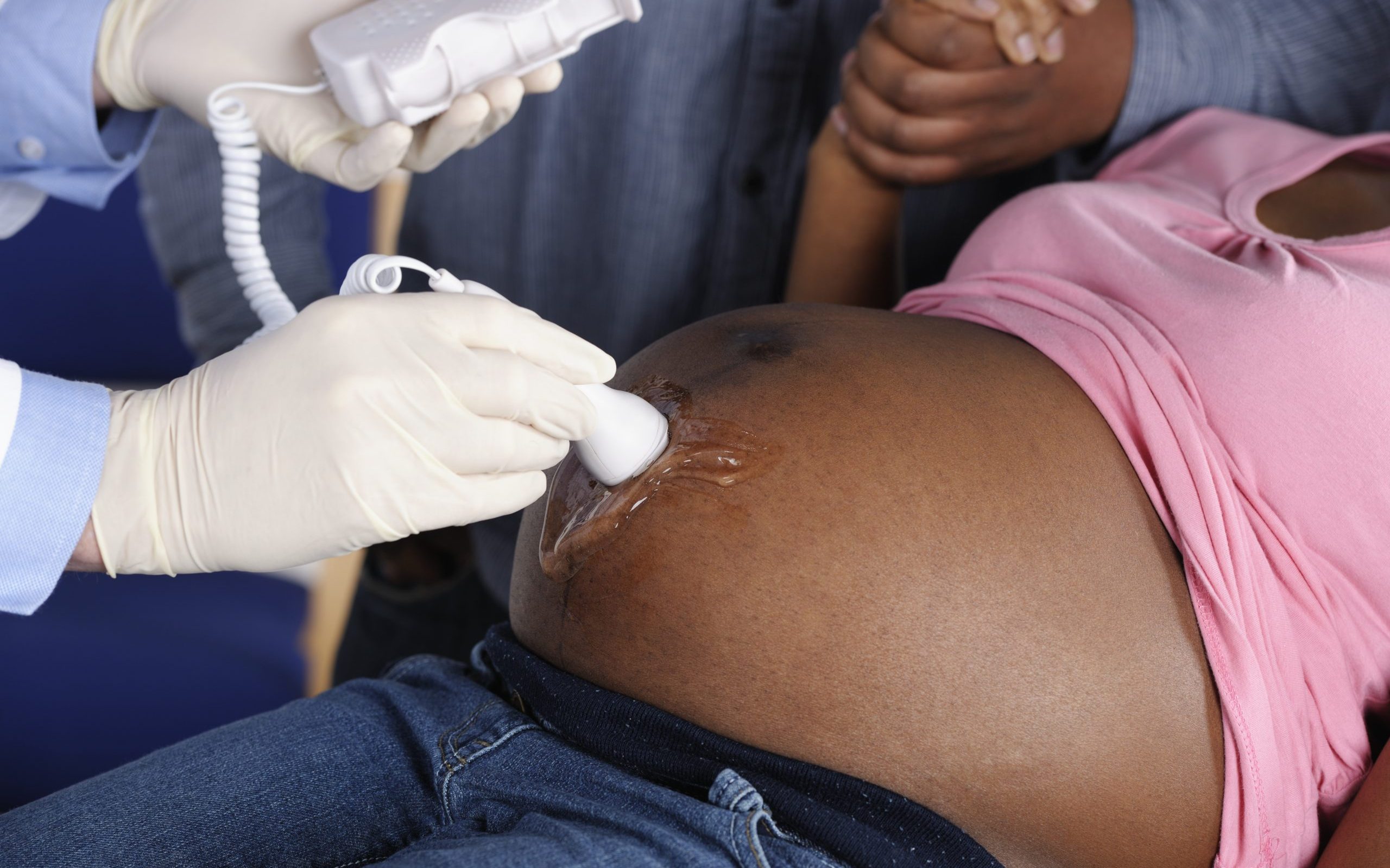
What do I need to know about pre-eclampsia?
By Hannah Bose | 22nd May, 2026 | 5 minutes read
Today, 22 May, is World Pre-Eclampsia Day and this year’s theme – Know Her Symptoms – gives us the perfect excuse to compile a quick fact-finding blog for expectant dads wanting to know more about this relatively common illness which can affect mums and babies during pregnancy.
After all, as her partner and baby’s dad, you’ll be best placed to be alert to the development of any of the key symptoms.
What is pre-eclampsia?
According to the NHS, pre-eclampsia is:
a pregnancy-related condition that causes high blood pressure. It can have serious complications but there are treatments that can help.
In its broadest form, it arises in around 10% of all pregnancies and in the majority of cases it will not be severe. However, in around 1-2% of all first pregnancies, it can give rise to serious, and potentially life-threatening, complications in both baby and mum.
For this reason, it’s crucial that you know the symptoms and what you and your partner should do if you’re concerned.
What should I be on the lookout for?
The earliest signs that mum might have pre-eclampsia will either be high blood pressure and/or having protein in her wee. However, neither of these symptoms is likely to be outwardly visible at an early stage. The good news is that both blood pressure and urine checks will be carried out regularly at her antenatal appointments with her Midwife, so this is another reason why it’s very important for her to always attend these appointments.
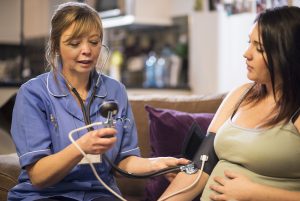
One thing that can be an indicator of pre-eclampsia is swelling in her feet, hands or face. This is caused by fluid retention and is relatively common in pregnancy, but it is something that she should mention to her Midwife, just to be sure.
If baby’s mum develops any of the following symptoms, though, these could be an indication that she has more advanced pre-eclampsia:
- a severe headache;
- visual disturbance, such as seeing what looks like flashing lights, or having blurred vision;
- feeling or being sick;
- pain in the stomach/below her ribs;
- heartburn which does not ease after taking medication;
- sudden swelling of her hands, feet or face; or
- just generally feeling very unwell.
Whilst any of these might be caused by something else, it’s nevertheless essential that you get urgent medical help for her. This might be by: calling her Midwife (she’ll usually have a contact number for this purpose), calling the 24/7 or triage number for your local maternity unit (again, baby’s mum should have been provided with this), contacting your GP for an urgent appointment, or ringing 111 for advice.
When does pre-eclampsia arise?
In simple terms, pre-eclampsia is an antenatal condition that can arise at any time during pregnancy; however, it’s more common in the later stages (e.g. after around 20 weeks), and can also occur in the days or even weeks after mum has given birth.

Are some mums more at risk?
At present, no one really knows what causes pre-eclampsia, which makes it tricky to predict who will or won’t develop the condition. However, certain groups of expectant mums are recognised as being more at risk. These include mums who:
- already have conditions such as high blood pressure, diabetes, kidney disease or an autoimmune condition;
- have had pre-eclampsia in a previous pregnancy, or who have a close family member who’s had the condition;
- are pregnant for the first time;
- are aged 40 or over;
- have a BMI of 35 or weigh more than 100kg;
- are expecting more than one baby; or
- are from a Black or South Asian ethnic background.
Again, the good news is that baby’s mum’s Midwife will have checked on all these things at an early stage of pregnancy and so will also be on the lookout for possible pre-eclampsia.
If the Midwife does consider baby’s mum to be more at risk of developing pre-eclampsia, she will give her advice on how to minimise the risk.
What will happen if it is pre-eclampsia?
The usual next step, if pre-eclampsia is identified or suspected, is to admit baby’s mum to hospital, where the medical team will be able to more closely monitor both her and your baby.
The team will attempt to lower mum’s blood pressure, via medication, and – depending on the severity of her symptoms – may either discharge her, but with additional monitoring for the remainder of the pregnancy, or keep her in until baby is born.
Usually, the symptoms of pre-eclampsia will usually disappear once baby has been born, although mum may need to take blood pressure medication and/or have her blood pressure checked for some time after.
For more information on what pre-eclampsia is, and the key warning signs, as well as the information set out in the Action on Pre-Eclampsia graphics (below), there’s also a helpful NHS YouTube video here.
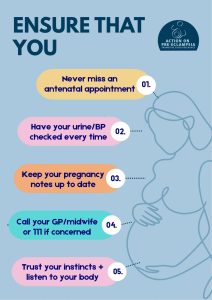
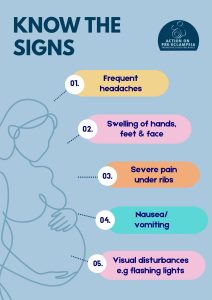
Images from Action on Pre-Eclampsia Facebook post – 22 May 2026

Hannah Bose
Hannah is Head of Quality at Inspire Cornwall CIC, with a background in law, education, editing and writing.
Hannah Bose's BlogsFurther reading and references
Action on Pre-Eclampsia (2024). Pre-eclampsia FAQs. [online]
Action on Pre-Eclampsia (2024). What are the signs and symptoms of pre-eclampsia? [online]
Action on Pre-Eclampsia (2024). What is pre-eclampsia? [online]
Action on Pre-Eclampsia (2024). Who gets pre-eclampsia? [online]
Action on Pre-Eclampsia (2026). Facebook post – 22 May 2026. [online]
NHS (2013) What is pre-eclampsia and what are the warning signs? YouTube. [online]
NHS (2026) Pre-eclampsia. [online]